
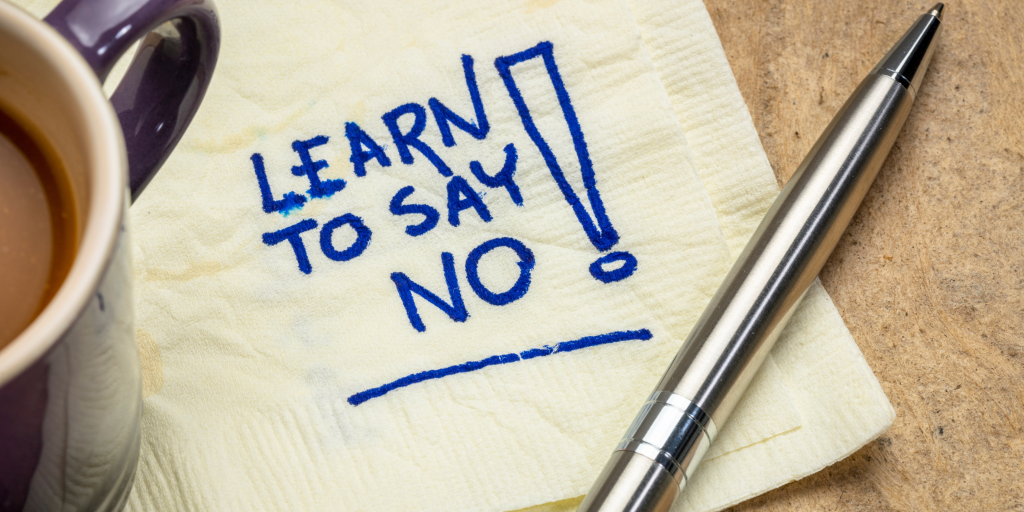
Positivity Through Boundaries in Midlife
If you’ve spent most of your life saying “yes” to everything and everyone—welcome. You’re not alone. Especially in midlife, many people wake up to realize that their calendars, energy, and emotional bandwidth have been hijacked by overcommitment.
Saying “yes” is often framed as generous. Supportive. Selfless. But unchecked, it leads to stress, resentment, burnout, and an identity that feels scattered.
Here’s the truth that hits hard but frees you:
Saying no isn’t negative. It’s necessary.
Boundaries aren’t walls. They’re doors with locks. They let in what nourishes you and block what drains you. And learning to say “no” is one of the most positive things you can do for your mind, body, and life.
Why Saying No Is So Hard
From a young age, many of us are conditioned to be agreeable. Especially if you grew up valuing approval, achievement, or being the “reliable one,” saying no can feel like failure.
Common internal narratives:
• “If I say no, they’ll think I don’t care.”
• “They’ll be disappointed.”
• “I should be able to handle it.”
• “It’s just easier to say yes than explain myself.”
But here’s what that conditioning doesn’t tell you:
Every yes that costs your peace is actually a no to yourself.
The Midlife Shift: Time, Energy, and Meaning
By your 40s, 50s, or 60s, time starts to feel more valuable than money. You realize:
• You can’t do everything.
• You don’t want to please everyone.
• And most importantly: You matter, too.
This is the perfect season to stop over-giving and start practicing healthy boundaries—not just to protect yourself, but to show up better in every area of life.
“You are not required to set yourself on fire to keep others warm.” — Unknown
Step 1: Identify Where You’re Overcommitted
Start with reflection. Where in your life do you feel:
• Constantly tired or stretched thin?
• Resentful of what you’ve agreed to?
• Like you’ve lost track of your own goals?
These are often signs that your “yes” needs revisiting.
Make a list of current obligations—personal, professional, social—and ask:
If I had to do this all over again, would I choose this?
If not, that’s a boundary waiting to be set.
Step 2: Reframe “No” as an Act of Respect
Saying no doesn’t mean you don’t care. It means you care about the right things—your values, energy, purpose, health.
When you say no with clarity and kindness, you:
• Show others how to respect your time
• Make space to say yes to what matters most
• Model emotional maturity and self-trust
“No is a complete sentence.” — Anne Lamott
It doesn’t need drama. It doesn’t need over-explaining. It just needs honesty.
Step 3: Use Clear, Firm Language (Without Guilt)
The best “no” is direct, respectful, and doesn’t waffle. Here are some phrases to practice:
• “I can’t take that on right now.”
• “Thanks for thinking of me, but I’m not available.”
• “I’m protecting my schedule this week.”
• “That’s not something I can commit to.”
You don’t need to apologize for protecting your peace. If someone takes offense at your boundary, that’s about their expectations, not your worth.
Step 4: Expect Discomfort—And Do It Anyway
If you’re new to saying no, it will feel uncomfortable. That’s normal. You’re rewiring old habits and people-pleasing patterns.
Expect some pushback, from others, or your own inner critic.
You might feel:
• Guilty
• Selfish
• Awkward
But every time you follow through, you build self-respect. And over time, your “no” becomes less reactive and more natural—because it’s coming from alignment, not defence.
Step 5: Know the Difference Between Obligation and Alignment
Just because you can do something doesn’t mean you should.
Use this quick check:
• Does this energize or drain me?
• Am I doing this out of guilt or out of joy?
• Is this aligned with my values, priorities, and season of life?
If it’s obligation without meaning, it’s okay to pass. Every “no” to a misaligned task is a “yes” to your well-being.
Step 6: Practice Saying No With People You Trust
Start small. Practice setting boundaries in low-stakes situations:
• Declining a last-minute invitation
• Saying no to a favour you can’t reasonably do
• Rescheduling a commitment that no longer works
Let trusted friends or family know you’re working on this skill. Most people will respect you more for it—not less.
“People who get upset when you set boundaries are the ones who benefited from you not having any.”— Unknown
Step 7: Watch What Grows in the Space You Create
Here’s the beautiful thing about saying no: it’s not just subtraction. It’s addition.
When you protect your time and energy, you make space for:
• Rest and mental clarity
• Creative projects or hobbies
• Stronger, more meaningful relationships
• Healthier sleep, movement, and routines
• More peace and less guilt
Boundaries don’t close your life down. They open it up.
Boundaries Are a Form of Positivity
You can’t be positive if you’re exhausted. You can’t be grounded if you’re overextended. You can’t be present if you’re constantly trying to please.
Saying no isn’t negative, it’s the foundation for a sustainable, joy-filled life.
In fact, it’s one of the kindest things you can do for everyone around you.
Why?
Because when you protect your needs:
• You show up fully for the people you do commit to
• You lead by example
• You create relationships based on truth, not obligation
What Saying No Looks Like in Real Life
• Choosing not to answer emails after dinner
• Leaving events early because your energy matters
• Not joining every group, project, or committee
• Skipping drama-filled conversations
• Refusing to explain your decisions beyond what feels right
These aren’t selfish acts. They’re acts of self-leadership.
You Don’t Owe Everyone Your Yes
Especially not at the cost of your peace.
In midlife, you’ve earned the right to live on purpose—not on autopilot. You’ve earned the right to protect your time, sanity, and soul. You’ve earned the right to say:
“That doesn’t work for me anymore.”
And that’s not mean.
That’s maturity.
Say no when you need to.
Say yes when it lights you up.
And always, always say yes to yourself.