
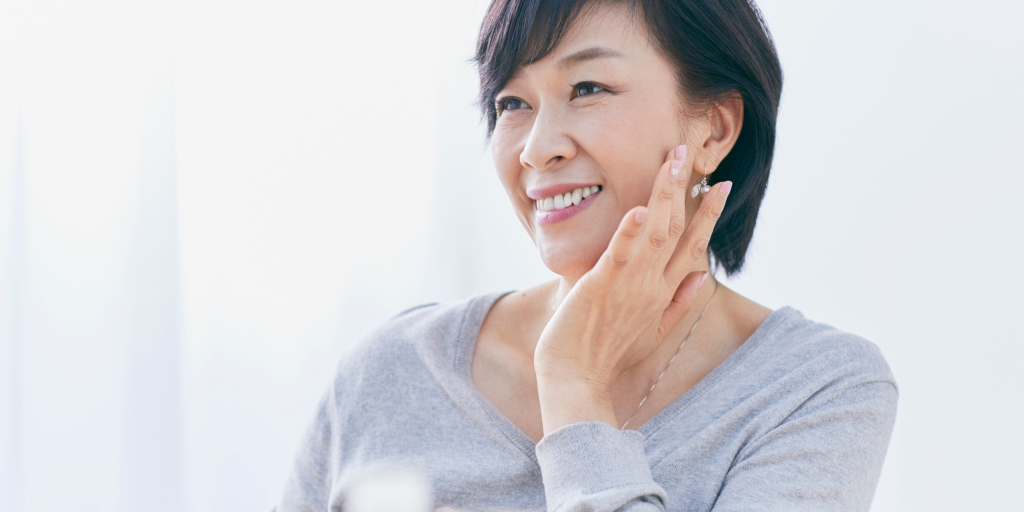
As a dermatologist, I am often asked why skin seems to “suddenly” age in the forties and fifties. The truth is, the process begins much earlier, but the effects become more visible in midlife due to a combination of biological changes and environmental exposures accumulated over decades.
Structural Changes Beneath the Surface
From the age of around 25, collagen production declines by approximately 1% per year. By midlife, this cumulative loss results in reduced dermal thickness and elasticity. Elastin fibres, responsible for the skin’s ability to snap back into shape, also degrade over time.
Sebaceous (oil) gland activity decreases, leading to dryness, while the skin barrier becomes less efficient at retaining moisture. Simultaneously, melanocyte activity (pigment-producing cells) becomes irregular, giving rise to uneven pigmentation, sunspots, or patches of hyperpigmentation.
External Factors That Accelerate Ageing
Two factors dominate:
- Chronic ultraviolet (UV) exposure – leading to photoageing, a primary driver of wrinkles, pigmentation, and skin laxity.
- Environmental pollution – generating oxidative stress, which damages DNA and weakens the skin barrier.
In Asia, where urban air pollution and high UV index levels are common, these effects are magnified.
Evidence-Based Interventions
1. Photoprotection
Daily use of a broad-spectrum sunscreen (SPF 30 or higher) is non-negotiable, regardless of weather or skin tone. Clothing with UPF ratings and wide-brimmed hats offer additional protection.
2. Topical Retinoids
Retinoids (retinol, tretinoin) increase cell turnover, stimulate collagen synthesis, and improve pigmentation irregularities. They should be introduced gradually to minimise irritation.
3. Antioxidants
Topical vitamin C (ascorbic acid) neutralises free radicals and supports collagen production. Combination formulations with vitamin E and ferulic acid enhance stability and effectiveness.
4. Peptides and Growth Factors
These bioactive molecules may aid in repairing the dermal matrix and improving skin firmness, although results vary by formulation.
5. Moisturisation
A well-formulated moisturiser containing ceramides and hyaluronic acid supports barrier function and hydration.
Professional Treatments
For patients seeking more rapid or pronounced results, non-surgical interventions may be appropriate:
- Chemical peels to improve texture and pigmentation
- Fractional laser resurfacing for collagen stimulation
- Microneedling to enhance product penetration and remodel the dermis
- Intense pulsed light (IPL) for vascular and pigmentation concerns
These should be performed by qualified medical professionals with experience in treating Asian skin, which is more prone to post-inflammatory hyperpigmentation.
Final Considerations
Skin ageing is inevitable, but its rate and extent can be influenced. A combination of preventative measures, targeted topical agents, and, where appropriate, medical procedures can maintain skin health and appearance well into later decades.
As I often tell my patients, consistency is more important than intensity — a measured, evidence-based approach will always outperform sporadic, aggressive interventions.