Finding my way back to myself after everything changed
At the end of Part 1, I spoke about the unraveling. The quiet collapse of a life that once felt certain and the identity shift that followed.
What we rarely talk about is what happens afterwards.
Rebuilding does not happen overnight. It unfolds slowly, often quietly while life around you appears to move forward as usual.
One moment from that time remains deeply etched in my memory.
I did not mention it in Part 1, but it became one of the first moments when I allowed myself to truly feel everything.
On the day the reality of my situation settled in, I messaged my closest friend and asked if she would travel with me to Batam for the weekend. She said yes immediately. Before we left, I told her one thing. Please do not ask me anything.
She simply said okay.
We arrived at a villa overlooking the ocean. The water stretched endlessly ahead of us and the air felt still. We sat quietly facing the horizon.
And then something in me broke open.
I cried in a way I had never cried before. Not quietly and not politely. It was the kind of crying that comes from somewhere deeper than words. She had known me for a few years and had never seen me like that.
And she still did not ask questions.
She simply stayed.
In that moment I understood something I would carry with me long afterwards. Sometimes the greatest support someone can offer is not advice or solutions. It is presence. The ability to sit beside someone in silence and allow them the dignity of their own emotions.
That weekend did not solve anything. It did not offer clarity.
But it gave me something I needed deeply.
Space.
Around that time another practice had already begun quietly shaping my life. In 2018 I started meditating regularly. Before that I had heard about meditation often but had never fully understood its value.
When I began practising consistently, I realised meditation is not about silencing the mind. It is about observing your thoughts without becoming consumed by them. It creates space between reaction and response.
That small discipline slowly changed the way I moved through difficult moments. Instead of reacting immediately, I learned to pause.
Looking back now, meditation became one of the earliest foundations of my healing.
Life after that began to shift gradually.
My circle changed in subtle ways. Some friendships deepened while others naturally drifted. There were no dramatic endings. Life simply rearranged itself and revealed who had the capacity to remain close.
Around the same time I experienced another first. I moved out and began living independently for the first time in my life.
Creating my own space felt quietly empowering. I lived with flatmates who brought uplifting energy into daily life. We worked out regularly, went for runs and shared simple routines that made everyday life feel lighter again.
Then the world paused.
Covid arrived and Singapore, like much of the world, entered a period of uncertainty and stillness.
Around that time my workplace was aware that my personal life had gone through a difficult upheaval. They approached me with an unexpected opportunity and asked if I would be open to spending some time based outside Singapore.
It was not an instruction. It was simply an offer.
Looking back now, I realise it was also an act of quiet support.
I accepted.
In 2021 I relocated to Dubai through work and later that year moved to London, remaining there until early 2023.
What began as a professional opportunity became one of the most expansive periods of my life.
London in particular offered a sense of freedom I had not felt in years. I walked through Hyde Park in the mornings and spent afternoons wandering through Kensington. Sometimes I would sit alone enjoying afternoon tea with nowhere else I needed to be.
For the first time in a long time, I had the space to decide what I enjoyed and how I wanted to spend my time.
Living abroad brought independence and perspective, but it also brought moments of loneliness. Being far from home has a way of amplifying silence.
Yet that distance also created something unexpected. It brought my family and me closer in conversation. When you live under the same roof it is easy to assume connection without truly speaking. Being thousands of miles away changed that.
Our conversations became more intentional.
In January 2023 I returned to Singapore.
Adjusting back took longer than I expected. After experiencing that level of independence, returning home required its own emotional recalibration.
It took nearly a year to feel settled again.
During that time I made another instinctive decision. I moved back in with my parents. I realised I had been away for many years, first through marriage and later through travel and work abroad.
In that time they had aged in quiet ways I had not fully noticed.
Being home allowed me to reconnect with them not just as parents but as individuals navigating their own stage of life.
Around the same time another shift was taking place professionally.
In January 2023 I left the family office where I had worked for seven years. It had been a stable role and a familiar environment, but something in me knew it was time to create space for the next chapter.
I did not yet have a clear plan. What I had was a quiet instinct that it was time to step away from what was comfortable and allow something new to emerge.
During that period an idea that had been sitting quietly in my mind began to take shape.
Shunya.
The word represents zero, but not in the sense of emptiness. In many traditions it reflects the still point before creation, the space where something new begins to form.
At that time Shunya existed simply as a concept close to my heart but without direction.
In January 2024 I began therapy.
Although the years before had brought reflection and growth, there were still emotions I struggled to process. I often found myself confused by what I was feeling and unsure how to move through it.
A dear friend noticed this and gently suggested therapy. I remember saying very simply, I need help.
It was understood.
What followed was a strong commitment to show up for myself. For the next year and a half I attended therapy each week, allowing space for conversations that were sometimes difficult but always illuminating.
Through different therapeutic tools and somatic practices, memories surfaced that I had long dismissed as insignificant.
I used to believe certain experiences had not affected me.
But the body remembers what the mind minimises.
One session remains vivid.
I walked in feeling light, almost excited for the conversation. Within minutes something shifted and I began crying uncontrollably. A hand towel was not enough and eventually my therapist passed me a bath towel.
I remember laughing through tears and saying this was not what I had planned for today.
For two days afterwards I stayed in bed, completely exhausted from the emotional release.
Then something changed.
On the third morning I woke feeling lighter than I had in years. I tidied my room, played music and found myself swaying gently as I moved around the house.
It felt as if a younger part of me that had been quiet for a long time had finally been allowed to breathe.
Through that deeper work Shunya began to find its direction. What had once been just an idea slowly evolved into a holistic wellness space focused on emotional awareness and nervous system regulation.
Around the same time another idea emerged.
During therapy I realised how rarely we pause to ask meaningful questions of the people around us. Conversations often remain on the surface rather than exploring what someone is truly experiencing.
From that awareness Spaceholder was created. A deck of psychologically grounded cards designed to help friends, families and teams ask thoughtful questions and hold space for one another in a safe and intentional way.
Looking back now, the years between Part 1 and where I stand today were never defined by one dramatic turning point.
They were shaped by many small moments.A weekend facing the ocean.
Learning to sit with stillness through meditation.
Living independently for the first time.
Travelling across cities and experiencing freedom alongside loneliness.
Returning home and reconnecting with family.
Beginning therapy and learning to listen more honestly to myself.
There are many more moments within those years that deserve their own stories.
Healing is deeply personal and every journey looks different. I am simply sharing how I slowly pulled myself back together.
One lesson stands above all the others.
The first person who must show up for you is you.
Friends can support you and family can care for you, but the person who ultimately sits with your emotions, makes the difficult decisions and rebuilds your life is yourself.
Part 1 was the unraveling.
Part 2 is the quiet rebuilding that followed.
You do not suddenly find yourself after loss. You return to yourself gradually when you allow space, patience and honesty to guide you back.
And when I think back to that moment in Batam, sitting quietly in front of the ocean with nothing but silence and the sound of waves, I realise something now that I did not understand then.
That moment was not the end of something.
It was the beginning of learning how to come home to myself.
Yours Sincerely,
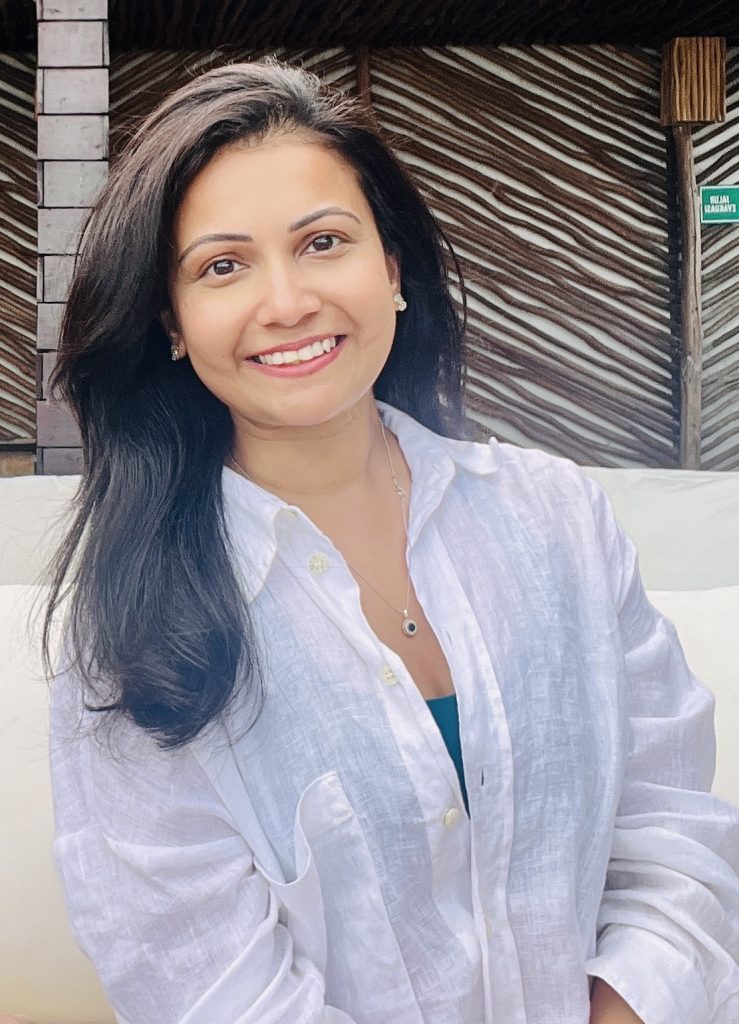
Dr Sadhna Upadhya, DHM
Dr Sadhna Upadhya is founder of Shunya and co-founder of Spaceholder, with a professional doctorate in healthcare management, focusing on movement, mind–body awareness and emotional wellbeing in midlife. Contact her at [email protected] and quote PRIMEMIDLIFE.